Cyber Attacks
What Is a Vishing Attack: How Voice Phishing Bypasses Security
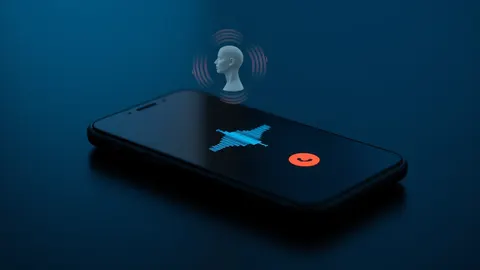
Voice biometrics allow attackers to spoof identities with high accuracy, making phone-based social engineering significantly more convincing than email scams.
Cyber Attacks coverage from Circuit Observer holds 19 articles, 17 of them reference guides. The newest was published on October 14, 2026. New stories are added as soon as they are confirmed, from more than 150 sources checked as often as every 45 seconds. Each story lists its sources. Primary sources we follow for this section include MITRE ATT&CK and CISA: Cyber Threats and Advisories.
Voice biometrics allow attackers to spoof identities with high accuracy, making phone-based social engineering significantly more convincing than email scams.

Small organizations face higher breach risks from email attachments because attackers target human trust rather than exploiting complex software vulnerabilities directly.

Security keys protect against remote theft and replay attacks, but they fail to stop physical coercion or device loss, requiring specific backup strategies.

Replay attacks bypass encryption by reusing valid data, forcing you to defend against valid credentials rather than stolen secrets.

Misconfigured rate limiting creates a false sense of security by blocking only the most obvious automated threats while leaving sophisticated attacks untouched.

Cryptominers exploit configuration gaps and trust assumptions rather than breaking encryption to hijack server resources for covert profit generation.

Physical access bypasses digital defenses entirely, allowing attackers to plant hardware keyloggers or steal credentials directly from unlocked workstations.

Two-factor authentication fails when attackers bypass the second factor through social engineering or session hijacking rather than breaking the cryptographic code itself.

Dominican nationals Patricia Joanna Almonte-Frías and Rineldys Feliciano Díaz-Cuevas face cyberstalking charges after being transferred to US custody in September.
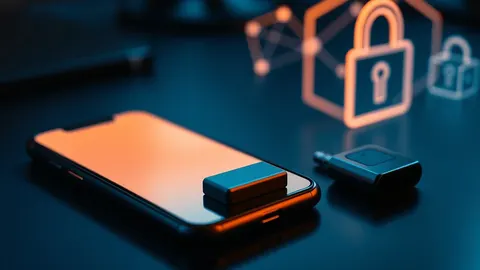
Passkeys use device-bound cryptography while YubiKey provides physical possession proof, creating distinct security boundaries for different threat models.

The new hardware design uses a manual dial to charge the device internally, ensuring users retain access even when primary batteries are fully depleted.

Insider threats often hide in plain sight within routine administrative actions, making behavioral context more valuable than raw volume metrics for early detection.

Passive interception often leaves no direct trace, forcing defenders to hunt for indirect signals like unexpected certificate validation failures or anomalous traffic volume spikes.

Your response team’s greatest vulnerability is not external intrusion but internal coordination failure during high-pressure decision-making windows.

Attackers exploit the gap between your email security and your payment verification, turning routine administrative tasks into high-value financial losses.

Domain spoofing hides behind valid DNS records, making forged messages look legitimate until you inspect the cryptographic headers that prove origin.

Basic CAPTCHAs fail silently when attackers use headless browsers, forcing you to choose between security and conversion rates.

Most bot protection fails because administrators treat bots as uniform threats rather than distinct traffic patterns with different operational goals.

Payment verification stops unauthorized transfers but cannot prevent fraud that originates from inside your organization or from manipulated business logic.