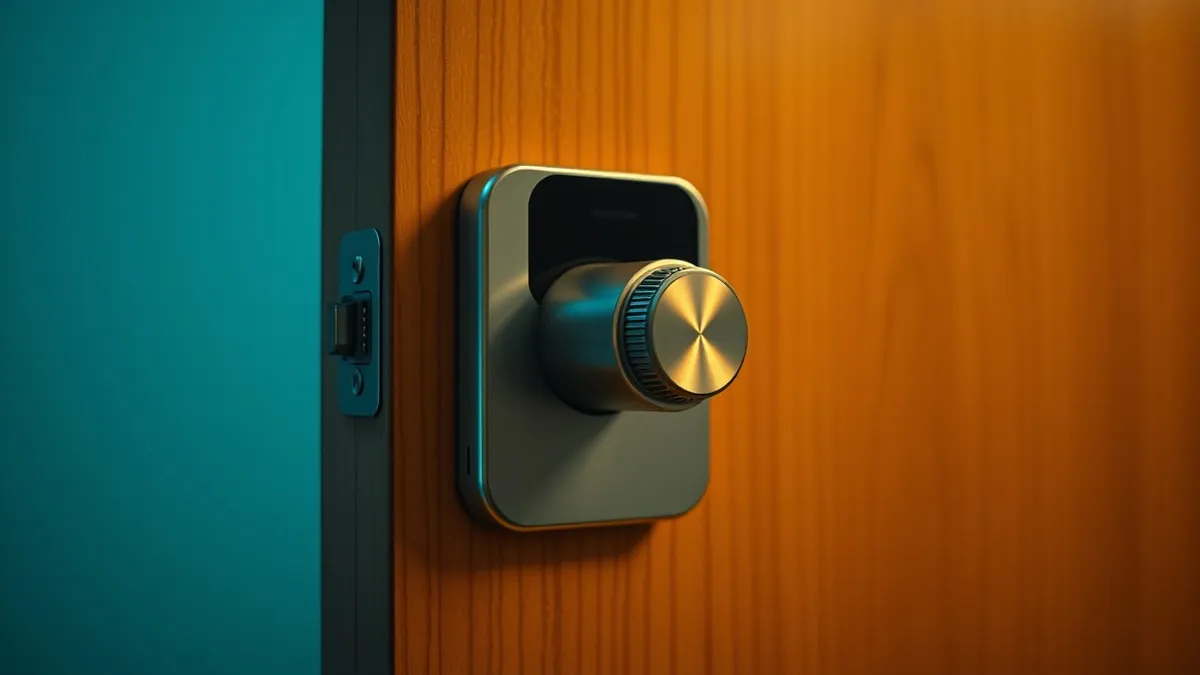
Key points
- Ring introduced a new smart lock featuring a manual 'power dial' mechanism.
- The dial charges the device internally to prevent total battery failure lockouts.
- The design addresses a common failure mode in battery-operated access control systems.
Ring has announced a new smart lock that incorporates a manual power dial to prevent users from being locked out due to dead batteries. According to ZDNET Security, the device includes a mechanical fallback that allows the lock to charge itself when the primary power source fails. This hardware addition aims to solve a persistent reliability issue in the connected home security market.
How it unfolded
- Ring announced the new smart lock with the manual power dial feature recently.
- The announcement highlighted the ability of the dial to charge the device internally.
- ZDNET Security reported that this design prevents users from being locked out when batteries die.
Who is affected
Organizations deploying smart locks for employee access or shared spaces face reduced operational risk with this hardware update. System administrators responsible for maintaining access control systems often struggle with battery management across distributed devices. A total power failure can lock staff out of buildings or secure rooms, causing significant delays. This new design mitigates that specific failure mode by providing an on-device charging solution that does not rely on external power sources or spare batteries.
What happens next
Business leaders should evaluate whether their current access control hardware relies solely on disposable batteries without mechanical fallbacks. The introduction of this feature suggests a market shift toward more resilient hardware designs for critical access points. While this specific model is new, the underlying principle of mechanical redundancy may influence future procurement standards for IoT security devices. Organizations should monitor vendor announcements for similar reliability improvements in their existing hardware portfolios.
What to do and how to stay safe: Ring
- Audit current smart lock deployments to identify devices that lack mechanical or manual override options.
- Establish a maintenance schedule for battery replacement to prevent unexpected power failures before new hardware is deployed.
- Verify that all access control devices have a proven method for manual entry in case of total electronic failure.
- Review vendor documentation for any new firmware or hardware updates that address power reliability issues.
Step-by-step guide: Can Two-Factor Authentication Be Hacked? Methods and Defenses
General security guidance from the Circuit Observer newsroom. It is not confirmed advice from the organisations named in this story.
Frequently asked questions
How does the Ring power dial prevent lockouts?
The manual power dial charges the device internally, providing enough power to operate the lock when the main batteries are dead.
Is this a new feature for all Ring locks?
No, this feature is specific to the newly announced smart lock model described in the report by ZDNET Security.
Does this fix require a software update?
No, this is a hardware design feature built into the new device to provide a mechanical fallback for power issues.