Key points
- The Rocket configuration removes the passenger seat for gas tanks and is invite-only.
- Production estimates have been delayed until 2028, more than a decade after deposits.
- The vehicle is not approved for public road use and lacks standard commercial details.
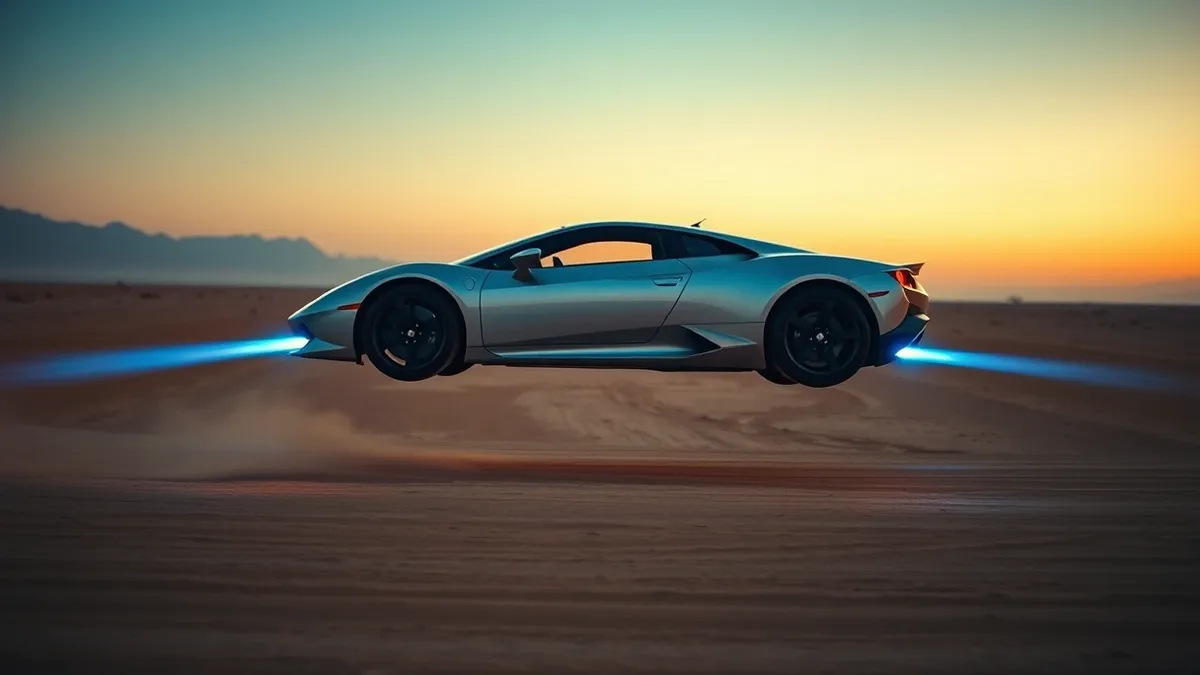
A modified Tesla Roadster performed a vertical launch and mid-air flip during a demonstration in Waco, Texas, but the vehicle is not a production-ready car for private ownership or public road use.
How it unfolded
- Elon Musk presented a Tesla Roadster driving up a multi-story ramp, launching into the air, and executing a kickflip over other Teslas.
- The vehicle landed using cold-gas thrusters after the stunt, which was described as pure spectacle rather than a product reveal.
- Tesla confirmed the Rocket configuration will be invite-only and will not be approved for public road use.
Who is affected
The demonstration primarily attracted online attention and praise on social media platforms like X, according to The Verge. Early adopters who paid deposits over a decade ago are affected by the delay, as production is now pushed to 2028. Wealthy supercar shoppers are impacted by the lack of pricing and battery range details. The Rocket version removes the passenger seat to accommodate ultra-high-pressure gas tanks, making it impractical for normal driving.
What happens next
Tesla has not provided pricing or specific battery range figures for the standard Roadster, though the range estimate was downgraded from 600 miles to 300 miles. The company admitted the flying version will not be approved for public road use, leaving its practical application a mystery. Production remains scheduled for 2028, maintaining a long wait for deposit holders.
The background in plain language
Teams evaluating new vehicle technologies should distinguish between concept demonstrations and production-ready hardware. A stunt vehicle often sacrifices safety, legal compliance, and daily usability for performance spectacle. When a manufacturer highlights unique propulsion methods like thrusters, users must check whether the design meets standard road regulations. Assessing commercial viability requires verifying if the product supports essential features like passenger capacity and standard navigation, rather than relying on viral marketing moments that ignore practical engineering constraints.
What to do and how to stay safe: Tesla
- Verify whether any new vehicle announcement includes regulatory approval for public road use before assuming it is a consumer product.
- Check official documentation for specific production timelines and pricing rather than relying on demonstration events for concrete details.
- Monitor updates from the manufacturer regarding battery range and safety specifications to assess real-world usability.
- Review terms for any deposits or pre-orders to understand your rights if production schedules are significantly delayed.
Step-by-step guide: Mobile Device Security for Small Business: Control Without Cost
General security guidance from the Circuit Observer newsroom. It is not confirmed advice from the organisations named in this story.
Frequently asked questions
Can I buy the flying Tesla Roadster shown in the demo?
No, Tesla says the Rocket configuration is invite-only and will not be approved for public road use.
When will the new Tesla Roadster be in production?
Musk pushed the production window out to 2028, which is more than a decade after early adopters paid deposits.
Does the flying Roadster have a passenger seat?
No, the Rocket configuration removes the passenger seat to make room for ultra-high-pressure gas tanks.