Key points
- The PhoneBot platform costs approximately $400 for hardware, excluding the reused smartphones.
- Four Android phones, including a 2017 model, successfully handled core sensing and control tasks.
- The system uses TensorFlow Lite for locomotion policies and smartphone cameras for person detection.
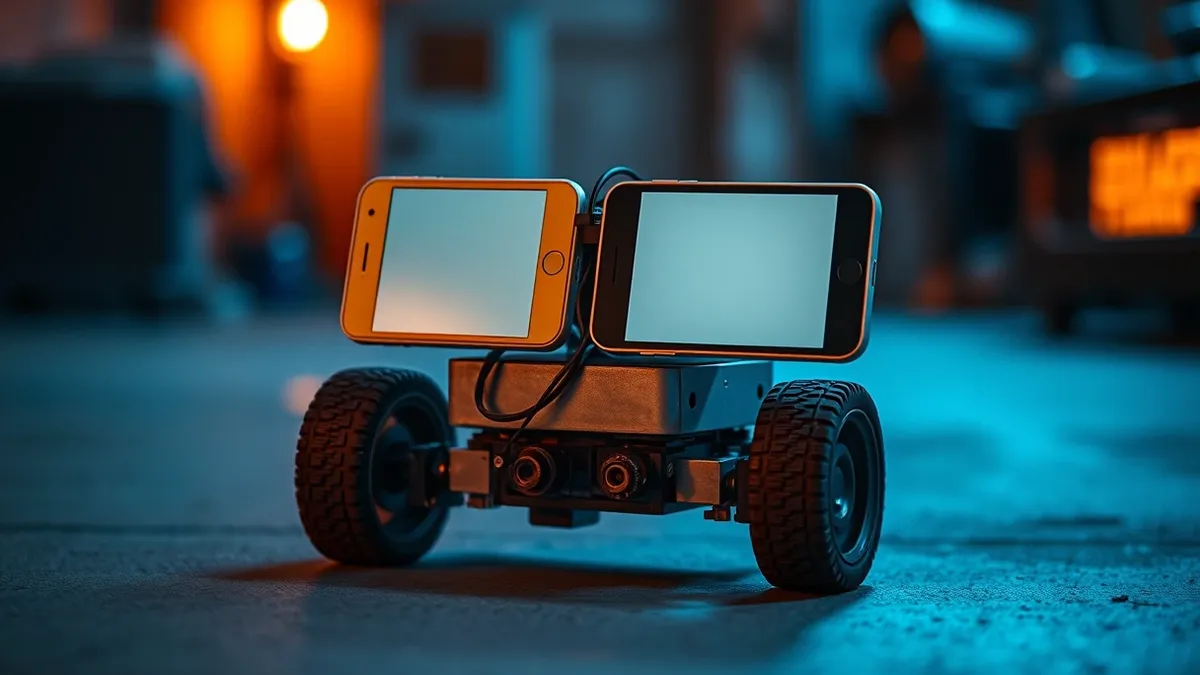
Researchers at the University of California, Los Angeles, developed PhoneBot, a compact humanoid robot that repurposes inexpensive Android smartphones to handle sensing, computing, and walking control. According to TechRadar, this open source platform offers a significantly cheaper alternative to existing small humanoid research systems by leveraging existing mobile hardware rather than dedicated components.
How it unfolded
- Researchers designed the robot to stand 483 mm tall and weigh 1.8 kg, using 13 servo motors for leg and torso movement.
- The team integrated four different Android phones, including a 2017 Honor 9 and three devices costing between $50 and $80.
- Testing confirmed that all four devices supported core functions like motion sensing, walking control, and visual detection.
Who is affected
The primary audience for this development includes makers and researchers interested in affordable robotics platforms. By reducing the cost of hardware to approximately $400, excluding the smartphone, the project lowers the barrier to entry for building humanoid robots. According to TechRadar, the system is considerably cheaper than several existing small humanoid research systems, making advanced robotics experimentation more accessible to academic and hobbyist groups who previously lacked the budget for expensive onboard computers and dedicated sensors.
What happens next
The PhoneBot system operates by having the smartphone’s camera track people while its inertial measurement unit supplies motion information for balance. A separate internal computer handles motor communications, receiving wireless commands from the smartphone over Wi-Fi and translating them into joint movements. This arrangement allows the camera to turn toward people without rotating the entire body. The robot features six actuated joints per leg and one for the torso, enabling precise movement controlled by the phone’s perception functions.
The background in plain language
Reusing consumer electronics in specialized machinery reduces both cost and electronic waste. Smartphones contain powerful processors and sensors that are often underutilized in daily tasks. By connecting these devices to robotic frames, engineers can leverage existing camera and motion tracking capabilities. This approach simplifies the hardware requirements for complex movements like walking. Teams usually verify that the mobile operating system can run the necessary control software reliably. Checking whether the device’s sensors provide consistent data is essential for maintaining balance and stability during operation.
What to do and how to stay safe: UCLA
- Verify that the wireless connection between the control device and the robot remains stable during operation.
- Ensure that the smartphone’s battery can sustain continuous processing and transmission without overheating.
- Check that the physical mounting of the device is secure to prevent shifting during movement.
- Monitor the robot’s balance algorithms for signs of instability or excessive motor loading.
Step-by-step guide: Mobile Device Security for Small Business: Control Without Cost
General security guidance from the Circuit Observer newsroom. It is not confirmed advice from the organisations named in this story.
Frequently asked questions
How much does the PhoneBot hardware cost?
The robotic hardware costs approximately $400, excluding the cost of the smartphone used for computing.
Which smartphones were tested with the PhoneBot platform?
Researchers tested four Android phones, including a 2017 Honor 9 and three inexpensive handsets costing $50 to $80.
How does the robot maintain balance and control movement?
The smartphone’s inertial measurement unit supplies motion information, while a separate computer translates wireless commands into joint movements.