Key points
- The Intel D-series GPU features 480GB of LPDDR5X memory, exceeding the 288GB found in Nvidia’s Blackwell Ultra B300.
- The accelerator delivers 1.3 petaflops of FP8 performance and 1.5TB/s memory bandwidth while consuming 350 watts of power.
- Intel states the card can run models with up to 300 billion parameters, with eight-card systems supporting trillion-parameter models.
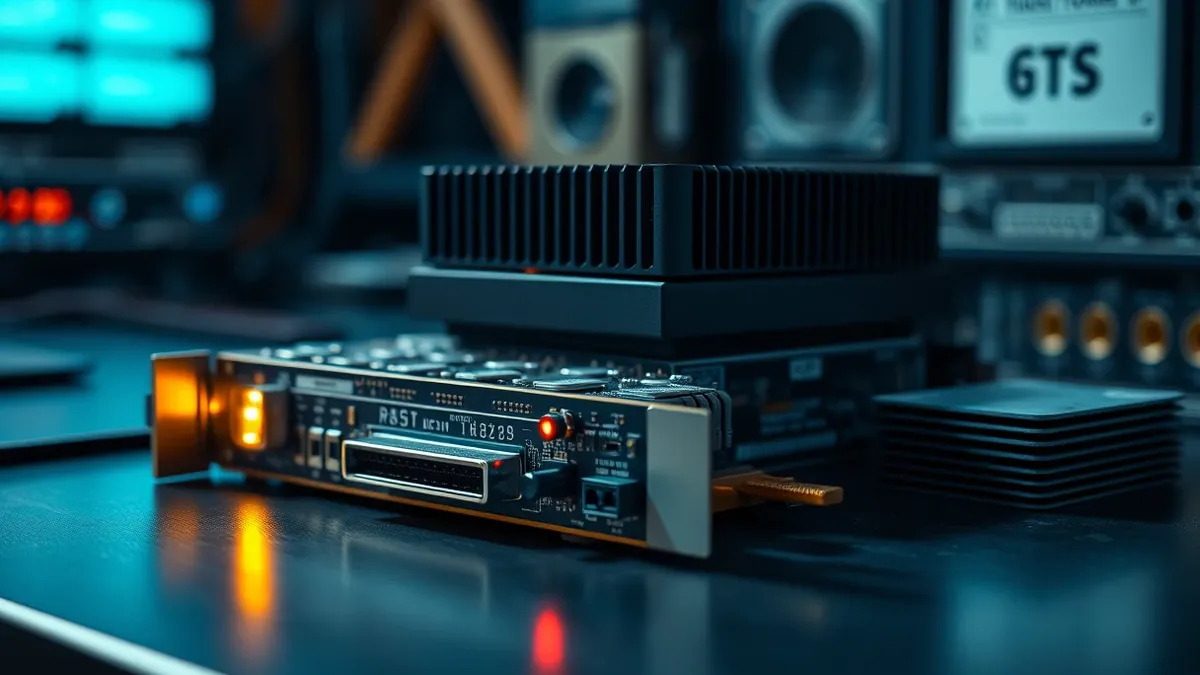
Intel has unveiled a new graphics processing unit with 480 gigabytes of memory, a capacity significantly larger than the storage drives found in most consumer laptops. According to TechRadar, the Intel GPU D-series is designed specifically for artificial intelligence inference workloads rather than gaming or general-purpose computing. The device uses LPDDR5X memory technology, which is typically associated with power-efficient mobile devices, instead of the GDDR7 memory standard often seen in modern high-performance graphics cards. This design choice reflects Intel’s strategy to prioritize memory density and energy efficiency for enterprise AI applications.
How it unfolded
- Intel announced the D-series GPU at the recent Open Compute Project Global Summit, revealing its 480GB memory capacity and specialized hardware architecture.
- The company clarified that the accelerator, previously known by the codename Crescent Island, is intended to support large language models containing up to 300 billion parameters on a single card.
- TechRadar reports that Intel positioned the D-series as a direct competitor to Nvidia’s Blackwell Ultra B300, noting that the Intel chip offers substantially more memory capacity than the Nvidia counterpart.
Who is affected
Enterprises deploying large-scale AI services are the primary audience for this hardware, as they require infrastructure capable of handling lengthy prompts and simultaneous inference requests. According to Anil Nanduri, vice president of AI Products and Go-to-Market at Intel Data Center Group, the industry is shifting toward inference as the defining AI workload.
He stated that organizations need infrastructure that delivers appropriate performance at a manageable cost. The D-series aims to make high-capacity inference practical to deploy and economical to scale for these businesses. Robotics applications requiring responsive processing are also cited as potential use cases for this accelerator.
What happens next
Intel intends for the D-series accelerator to integrate seamlessly into existing data center environments, leveraging standard infrastructure rather than requiring specialized cooling or power setups. While the technical specifications are now public, TechRadar notes that pricing and availability details remain undisclosed. The company’s focus appears to be on enabling eight-GPU systems to accommodate models exceeding one trillion parameters, facilitating more complex AI operations. Industry observers will likely monitor how this memory-centric approach compares to traditional high-bandwidth memory solutions in real-world inference scenarios.
The background in plain language
AI inference involves using a trained model to generate answers or predictions, which requires keeping large amounts of data in memory. Memory capacity determines how big a model can fit on a single chip, while bandwidth dictates how fast data moves. LPDDR5X is a power-efficient memory type common in laptops, offering high density but lower speed than gaming-focused GDDR7. Teams usually evaluate whether their workloads prioritize model size over raw speed. Check whether your applications need massive capacity for large models or faster throughput for rapid responses.
Background: Large language models
Large language models act as probabilistic optimizers that predict the next most likely token rather than verifying logical correctness. This mechanism means they excel at pattern matching but fail at rigorous reasoning. You must treat their output as a draft requiring strict validation, not a final solution.
Read the full guide: Large Language Models as Optimizers: Why Your Code Changes Break
What to do and how to stay safe: Intel
- Review current AI workload requirements to determine if model size or inference speed is the primary bottleneck for your infrastructure.
- Evaluate whether existing data center power and cooling systems can support high-density memory configurations without significant upgrades.
- Monitor vendor announcements for pricing and availability details before committing to hardware procurement plans for AI inference clusters.
- Assess compatibility between new accelerators and existing software stacks to ensure seamless integration into current enterprise AI services.
Step-by-step guide: Injection attacks examples: how prompt leaks break AI systems
General security guidance from the Circuit Observer newsroom. It is not confirmed advice from the organisations named in this story.
Frequently asked questions
How does the Intel D-series memory compare to Nvidia's latest GPU?
The Intel D-series offers 480GB of LPDDR5X memory, which exceeds the 288GB of HBM3e memory found in Nvidia’s Blackwell Ultra B300, according to TechRadar.
What type of memory does the Intel D-series use?
Intel chose LPDDR5X memory for the D-series, a technology commonly found in laptops and power-conscious devices, rather than the GDDR7 memory associated with modern graphics cards.
Can the D-series run very large AI models?
Yes, Intel states that a single D-series card can support models with up to 300 billion parameters, while an eight-GPU system can handle models exceeding one trillion parameters.